DDA launches second phase of ‘Towering Heights’ project | Price, location, registration date
By Bricksnwall | 2026-01-04
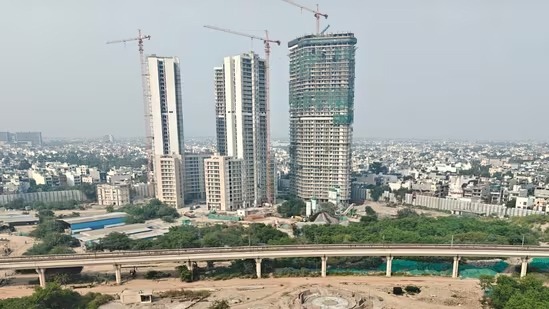
The Delhi Development Authority is making 741 flats available for private buyers. Plus, 107 flats are set aside for bulk allotment to government institutions.
At the beginning of the year,
the Delhi Development Authority (DDA) unveiled the second phase of its housing
initiative, DDA Towering Heights. This project, located at the East Delhi Hub
in Karkardooma, represents Delhi's inaugural housing development conceived
under the Transit-Oriented Development (TOD) strategy.
Under the Karkardooma Housing
Scheme 2026, 741 flats will be available to private buyers, with allocations
made on a first-come, first-served basis. Furthermore, the Delhi Development
Authority (DDA) announced on January 3rd that 107 flats are reserved for bulk
allotment to government entities.
When does the registration
begin?
The registration for the 2BHK
flats kicks off on January 8th, with the scheme running through March of this
year. Flat bookings are set to start on January 23, 2026, coinciding with
Basant Panchami, and will conclude on March 31, 2026, according to the
announcement.
The DDA specified that the
booking amount for each flat is ₹4,00,000, and there's no limit on how many
flats an applicant can book within the retail category.
The cost of the apartments
The selling price for the
apartments falls between ₹1.78 crore and ₹2.35 crore.
Since the flats are
currently being built, and are over 90 percent finished, the allottees will
only need to pay 75 percent of the total selling price. The initial
Demand-cum-Allotment Letter will reflect this 75 percent figure," the
statement explained.
The initial asking price for
the apartments excludes maintenance fees, GST, conversion charges, and water
connection fees. GST will also be applied to the sale price at the current rate
of 5%, according to the announcement.
Retail buyers must apply online via the DDA’s Awaas Portal. A one-time registration fee of ₹2,500 is required (waived for current users), along with a non-refundable booking amount of ₹4 lakh per flat. This amount will be deducted from the final sale price if the allotment is successful. The statement clarified that there is no cap on the number of flats an applicant can book in the retail category.
Furthermore, 107 apartments
are earmarked for bulk allocation to government entities. The statement
clarified, "An application will be considered a bulk purchase if it
requests at least 10 flats."
The statement specified the eligible categories of government institutions for this bulk allotment: central and state government ministries and departments; central and state government universities; central and state government organizations, undertakings, and public sector undertakings; and central and state autonomous bodies.
About
DDA's inaugural TOD project:
DDA's Towering Heights, a
high-end residential undertaking, is being developed with project management
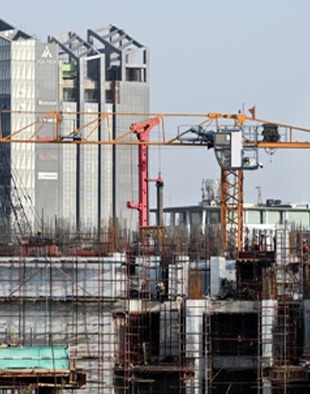
oversight from NBCC. The centerpiece is a 48-storey tower, reaching a height of
155 meters, which will be Delhi's tallest residential structure.
This project marks the initial
housing development to be realized under Delhi's Transit-Oriented Development
(TOD) policy.
In the initial phase of the
housing scheme, which began in October of the previous year at the same
location, the DDA made 1,026 flats available.
An earlier announcement
indicated that roughly 1,500 bidders had signed up for the e-auction, exceeding
the 1,026 premium 2BHK flats offered in the 48-story, 155-meter-tall tower.
The East Delhi Hub, covering
30 hectares, is being built as a mixed-use urban center. It will feature
residential, commercial, and civic areas centered around a metro hub. The
project is located next to the Karkardooma Interchange Metro Station, offering
direct access to both the Blue and Pink Lines. It also connects to NH-9 and
NH-24, and is close to the Anand Vihar ISBT railway station.
A Transit-Oriented Development (TOD) project blends high-density, mixed-use, and mixed-income structures, all conveniently located near rapid transit systems. The design emphasizes public spaces, fostering walking, cycling, and the use of public transit. The goal is to lessen the need for individual cars.
Source: Hindustan Times