Celebrate Diwali with Traditional Rangoli Designs
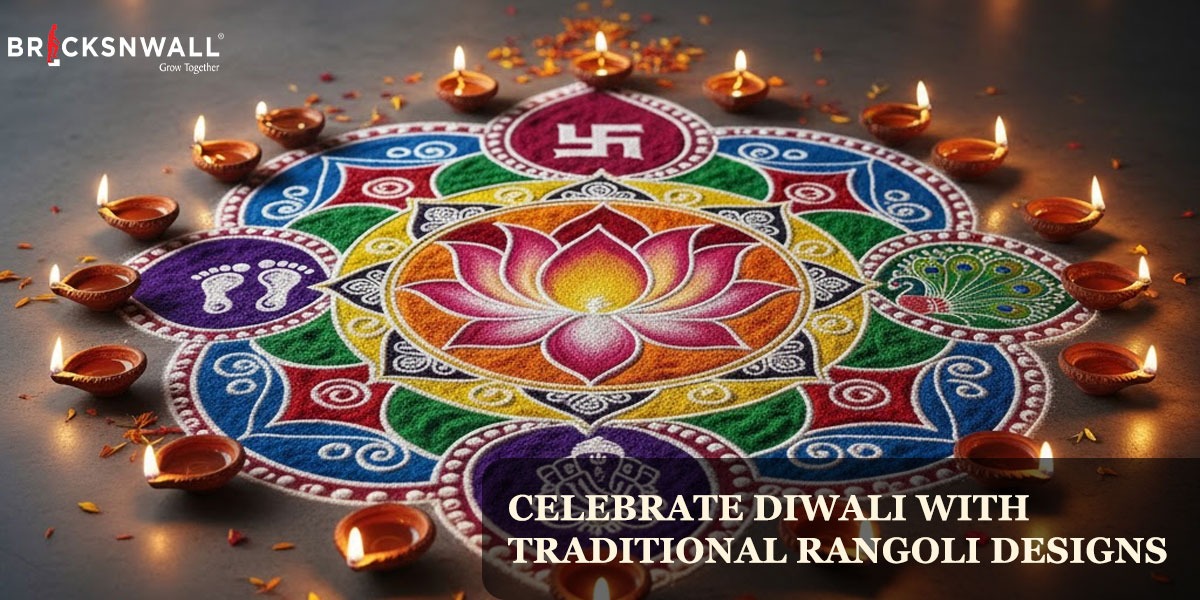
Use bright Rangoli designs to celebrate Diwali 2025! Learn how to make Rangoli that is eco-friendly, creative, and beautiful to welcome wealth and happiness. You can use conventional floral patterns or new 3D and LED-enhanced concepts.
The Magic of Rangoli

Rangoli is more than just a type of art; it\'s a sign of welcome, wealth, and joy. For hundreds of years, households in India have painted their doorways with beautiful decorations, thinking that it will bring Goddess Lakshmi into their homes. Each color and pattern has a meaning: red means love, yellow means holiness, green means fertility, and white means serenity.
Rangoli is a way for people to express themselves,
not just a symbol. Swirls, flowers, geometric patterns, and even abstract
designs show how the person who made them feels and what they like. In 2025,
rangoli has changed to mix old and new designs, using natural powders,
eco-friendly materials, and classic patterns with current ones.
Rangoli Designs from the Past
Indian culture is where traditional rangoli designs come from.
Here are some ideas that families still use today:
Patterns with Flowers

Floral patterns never go out of style. People often draw lotus, marigold, and hibiscus shapes to show purity, devotion, and happiness. You can make concentric rings of petals with red, yellow, and white powders, and then add little dots in colors that are different from the petals to add detail.
How to Create It:
- Use chalk or a plate to help you draw a big
circle.
- Use white chalk to draw lotus or marigold
petals around it.
- Put red, orange, and yellow powders in the
petals.
- Add green highlights to the leaves that are
between the petals.
- For contrast, add white dots or rice flour
outlines at the end.
Patterns in Shapes

Squares, triangles, and circles are common shapes in classic rangoli that are symmetrical. Mandala-style rangoli has radial symmetry, which makes it seem lovely and makes the home feel more balanced and peaceful.
How to Make It:
- Draw a light grid with chalk. Squares or
triangles work well.
- Pick a central point and make balanced forms
that go out from there.
- Use different colors (red, blue, and white) to
add depth and balance.
- To get clean edges, use a funnel or filter.
- Use rice flour or glitter to make the edges
stand out.
Diya Patterns

A conventional but eye-catching design for a diya is one with a core diya surrounded by flowers or geometric shapes. It shows how light wins over darkness and gives your rangoli a spiritual touch.
How to Make It:
- Put a little circle in the middle to hold your
diya.
- Draw flames that spread out from the center.
- Put bright colors like red, orange, and yellow
near the fire.
- Put circular or floral borders around the
diya.
- When you're done, put a real diya or LED lamp
in the middle
Designs Based on Nature

Leaves, vines, birds, and even little animals are common themes. These decorations link the celebration to nature, stressing peace and plenty.
How to Make It:
- Draw vines or leaves on the floor that look
like they're moving.
- Use darker colors to add veins and fill in the
leaves with green.
- Put miniature birds, butterflies, or flowers
in between.
- For a natural look, use flower petals or rice grains.
New Rangoli Ideas for Diwali 2025
Modern rangoli lets creativity and new ideas come together. Millennials and young families are trying out different materials, textures, and methods to make their designs stand out.
Fusion Rangoli
Combine modern art with classic patterns. Picture a lotus with colorful geometric triangles around it, or a diya in the middle with a swirl of abstract designs around it. Fusion rangoli can be bright, vibrant, and one-of-a-kind.
How to Make It:
- Begin with a classic design, such as a diya or
lotus.
- First, draw the outline with white chalk, and
then fill it in with abstract triangles or spirals.
- Add metallic glitter or beads to regular
powders.
- For a trendy glow, use LED lights around the
outside ring.
Rangoli in 3D

You may make your rangoli look three-dimensional by stacking colorful powders, flower petals, or colored rice on top of each other. 3D rangoli designs add depth and shadows to the artwork, making it more interesting and eye-catching.
How to Make It:
- Start with a simple outline of a circle or
flower.
- For depth, use darker colors in the middle and
softer colors on the outside.
- Use petals or geometric borders in different
hues to provide depth.
- Add texture by sprinkling flower petals or sand on the raised edges.
Rangoli That Is Good for the Environment
Sustainability is going to be a big deal in 2025. Use flower petals, rice flour, and organic powders. You can even use LED lights that can be used again or glitter that breaks down in the environment to make the artwork shine without hurting the environment.
How to Make It:
- Natural hues include rice flour, turmeric, and
beetroot or spinach powder.
- Instead of fake glitter, use crushed shells or
biodegradable shimmer.
- Use marigold or rose petals to decorate the
edges.
- Put in reusable diyas or solar LEDs for light.
Minimalist Rangoli

Less is sometimes more. Minimalist rangoli uses
fewer colors and simpler designs but focuses on symmetry and beauty. A single
geometric pattern or a little diya surrounded by dots can really catch the eye.
How to Make It:
- Pick a modest, clean area, like the entrance
or beside a diya.
- Draw a simple shape, such a circle, lotus, or
mandala outline, with a light touch.
- Use only two or three delicate hues, like
white, gold, and one bright color, like red or turquoise.
- Put little dots or a single diya in the middle
to draw attention.
- Leave a lot of free space around the design; that's part of the art.
Rangoli with Lights
Adding tealights, candles, or small LED lighting gives it a glowing quality. Put them in rows of dots or along patterns to highlight classic designs and combine art with light.
How to Make It:
First, draw your design. Circular or floral designs
work well.
Use hues that reflect light well, including gold,
white, and yellow.
Put tealights or LED candles along the edges.
For a balanced glow, make sure the lights are spread out properly.
How to Make Beautiful Rangoli
- Make a plan for your design: Before adding
colors, softly sketch with chalk.
- Pick a color scheme: Colors that go well
together make things look better.
- Use tools like little cones, sieves, or
stencils to help you stay precise.
- Add Textures: For depth, use flower petals,
rice, sand, or glitter.
- Add Lights: In the evening, small lamps or
candles make your rangoli shine.
- Practice symmetry: Even slight misalignments
can throw off the equilibrium of the whole thing.
- Invite Family Participation: Rangoli is a
pleasant, collaborative activity.