1, 2, 3 and 4 BHKs in one housing complex: Can mixed apartment sizes be a pain point in housing societies?
By Bricksnwall | 2026-05-15
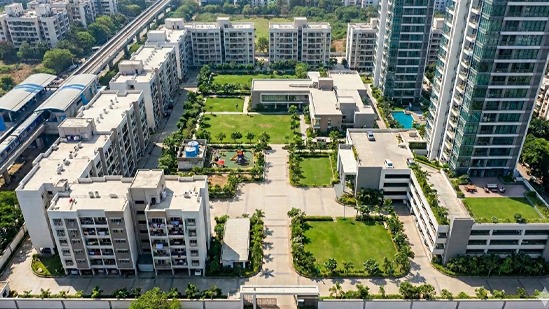
Real estate experts believe financial
differences between smaller and larger unit owners can cause issues about
upkeep, clubhouse access, parking distribution.
Nimesh Shah (name changed), 35, bought a 3BHK
flat in a premium housing society in Mumbai’s outskirts, thinking he had
finally got an aspirational address in the city’s increasingly costly real
estate market.
Shah was earning around Rs 6 lakh a month and
strained his resources to buy a property in a luxury residential tower that had
bigger 4 and 5BHK apartments. But soon after getting ownership he realized that
the flat was just one component and there was another difficulty completely,
how to maintain the lifestyle standards of the society.
The turning point came when the tenants in
the building suggested redoing the lobby interiors as they were not thrilled
with the aesthetics of the current interiors. Homeowners were required to go
into their own budgets to help for the upgrade
The demand put a financial burden on Shah who
was already paying an EMI of about ₹2.75 lakh every month and additional ₹2
lakh to ₹2.5 lakh on household and lifestyle expenditures. “I suddenly felt
boxed in, and even one off-the-cuff payment for society felt stressful because
I was already in a position where most of my income was committed,” he
added.
Shah’s experience underscores a worry that is
emerging in luxury township developments and premium gated communities
throughout Mumbai, Pune and Bengaluru — the financial disparity between those
living in the smallest apartments and others living in much larger mansions in
the same complex. Developers in township projects might offer a mix of 2, 3, 4
and 5BHK configurations to cater to a wider range of homebuyers, but the social
and financial dynamics inside such communities can sometimes force buyers at
the lower end of the project’s pricing spectrum.
Real estate advisors say luxury societies are seeing discretionary expenditure
on aesthetics, facilities, events and upgrades generally driven by tenants of
larger units with much higher disposable incomes. For property purchasers who
have stretched their budgets to acquire a premium address, these ongoing fees
can progressively become tough to absorb, even with relatively good salaries on
paper.
What has caused the current concern over the debate on mixed sizes of
apartments in the housing societies?
The online argument picked up steam again
after a recent viral post on reddit from a housing society in Karnataka
complained that occupants of 1 BHK and 1 RK apartments were not allowed to use
amenities like the gym and swimming pool even after paying the maintenance
payments. The article prompted a wider conversation about socioeconomic
divides, unequal access to facilities and tensions between occupants of smaller
and larger homes.
A resident said the society has made
restrictions that do not allow residents of small flats to use communal
amenities although maintenance is charged from everybody.
“In projects with varying apartment sizes,
residents often pay differing levels of maintenance, and have differing levels
of spending power. “This can create divisions in societies over a period of
time, particularly when it comes to decisions on clubhouse usage, parking
allocation or sinking funds,” said Mumbai-based real estate consultant Dipesh
Joshi.
In the example of Nimesh Shah, he was living
in South Mumbai and sold his smaller flat to buy a bigger one in a semi-luxury
complex in the suburbs. But after one year in the new house he understood it
was not a feasible long-term option. The reason was the people living in 4- and
5-BHK apartments were different from the people living in 3-BHK apartments and
there were disagreements over day-to-day upkeep and finances. At last when Shah
came to me I told him to sell the flat and buy in a nearby project. But it is
not an easy decision to downgrade either," Joshi added.
What do the developers say about the product
mix?
Real estate developers say the product mix is
more diverse in township projects in places such as Pune and Bengaluru. We have
township developments in Pune and Bengaluru where developers offer 1,2,3 and 4
BHK apartments in different buildings of the township. "But in Mumbai
there is hardly such a mix of products," said a developer who did not want
to be named.
“We have projects which offer 1 and 2 BHK or
2, 3 BHK or 3, 4, 5 BHK. This is the mix of products and safe mix to make the
projects viable. Another reason for not having too many product mixtures in
Mumbai is land limitation. “So developers have a very sharp and targeted
product mix to make sure they don’t go wrong,” added the developer.
“In Mumbai, the development control
regulations do not put any restrictions on a mix of apartments in a residential
project, so developers can provide 1-5 BHKs in one society.
But these constraints are mostly for special schemes like MHADA, SRA or
rehabilitation projects with rehab or affordable housing commitments,"
said the developer. "In fact, product mix is primarily driven by
economics, FSI efficiency, parking requirements and market demand," he
said.
Source: Hindustan Times