Did your neighbour do it so you can do it too? Fit safety grills or enclose a balcony? Here’s what the Bombay High Court has to say:
By Bricksnwall | 2026-07-23
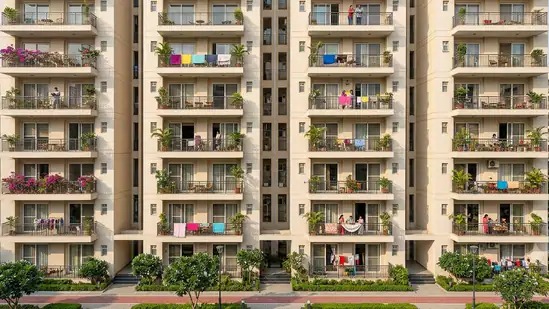
Bombay HC directs Maharashtra to formulate
guidelines on modifications flat owners can carry out without prior sanction of
civic bodies.
Many apartment complex dwellers will often
justify their modifications by saying, "Everyone else has done it." Common
arguments in renovation disputes are “Everyone has enclosed their balcony” or
“Many neighbours have extended their bedrooms”. But one unauthorized change
does not legally justify another.
If a flat owner constructs a permanent shade
over a balcony, encloses it for additional living space, demolishes partition
walls to extend a bedroom, without the approvals required under the sanctioned
building plan or municipal laws, such changes are unauthorised even if several
other residents have carried out similar works.
Recognising the confusion among homeowners,
the Bombay High Court has asked the Maharashtra government to formulate a
comprehensive policy that will clearly specify the nature of alterations that
flat owners can undertake within their apartments without taking prior
permission from municipal authorities.
The step is likely to deliver much-needed
clarity to lakhs of flat owners who carry out modest improvements regularly but
are often uncertain about the necessity for civic permissions.
What made the Bombay High Court issue the
direction?
According to the media reports, a bench of
the Bombay High Court stated that in the normal course, most homeowners build
safety grills, lightweight protective structures over open terraces, walls with
gypsum or wooden panels or rejig utility rooms to their liking. These are
generally seen as small adjustments but the lack of clear, uniform guidelines
has resulted in uncertainty, clashes with housing societies and builders, and
patchy action by municipal authorities.
The judges recognized that the open-to-sky
terraces had been enclosed unauthoritatively by the neighbour as well as
originally built by the developer. They felt that the continued existence of
such unauthorized constructions could not be countenanced and deserved to be
removed instantly, LiveLaw said.
Flat owners, often make changes to interior
partition walls with wooden or gypsum panels as per their needs, fix safety
grills, lightweight sheds over balconies or terraces, a LiveLaw article said.
Generally, such adjustments are made after the issuance of an Occupation
Certificate (OC). Similar changes before the issuance of the OC might delay the
award of the certificate and prohibit the developer from completing the
project. It also leads to disagreements and litigation.
What will policy entail?
The proposed framework is expected to reduce
disputes and help homeowners understand what they can legally change in their
apartments without breaking any municipal regulations.
media reports said the proposed policy would
deal with common changes often made in residential buildings such as whether
residents can put up safety grills, enclose balconies or put light covers over
balconies and terraces, erect or remove non-load bearing partition walls, merge
or split rooms with temporary material or reallocate utility areas within their
flats. Such clear instructions would assist homeowners and local officials
avoid avoidable disputes.
The High Court further highlighted that civic
organizations should follow a common strategy while dealing with unlawful
renovations and not different approaches in different jurisdictions. The court
clarified that while the state has been directed to formulate the policy, the
unauthorised constructions will continue to be governed by the existing legal
framework and can attract action from the concerned municipal authorities till
such guidelines are notified.
Source: Hindustan Times