Real estate developers should work with civic entities to improve infra, examine urban impact of projects: MoHUA Secy
By Bricksnwall | 2026-09-19
Real estate developers should engage with
civic agencies to establish infrastructure and analyze the wider impact of
developments on water, sewage, and electricity, the MoHUA Secy stated.
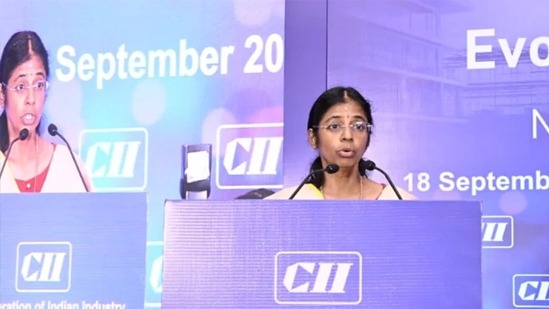
"Real estate developers should
collaborate with municipal agencies to create the physical infrastructure
required to support housing and commercial projects and evaluate the impact of
every project beyond its boundaries, from the water it displaces, the sewage it
generates, to the energy it consumes," D. Thara, secretary (Department of
Capital Development), in the ministry of housing and urban affairs, said in the
Capital on Sep 18.
“Every development has an interface with the
larger urban environment, and we need to understand and mitigate the
externalities that construction can create for the city,” she said at CII’s
real estate conference on "The Changing Landscape of Indian Real Estate:
Navigating Growth, Innovation, and Institutionalization."
She also called on real estate developers to
give due importance to rain gathering, water recycling, and sewage
treatment.
Throughout the day-long discussions, participants emphasized the growing significance of sustainable urban development and the necessity of incorporating environmental factors into planning and approval procedures.
The secretary called for a new public-private
paradigm in urban development, urging real estate developers to work more
closely with municipal agencies and to consider the impact of every project
outside its boundaries, from the water it displaces and the sewage it generates to the energy it consumes and the infrastructure it requires.
Thara also called on real estate developers
to adopt a broader interpretation of value, which includes the infrastructure
burden, resource consumption, and environmental impact, not only the price of
the property.
“Real estate is more than just bricks and
mortar. It is a living fabric of communities, defining how people connect,
work, live, shop, entertain, and enjoy their environment. We are increasingly
moving beyond the physical structure to developing inclusive, vibrant, and
sustainable surroundings that enhance the quality of life.
The participants also discussed how new
sectors, new economic corridors, and the growth of new cities are changing demand patterns and creating new opportunities for the real estate sector.
“If we want to do real estate at scale, we’ve
got to accelerate and integrate approvals. “We must have a true single window
system so that applications can be moved across different authorities at the
same time instead of going to each department separately,” said Harshvardhan
Bansal, chairman, CII Delhi State, and co-founder, Unity Group.
We need to create affordability throughout the value chain, not just at the end of it. It means better FSI,
efficient land models, faster approvals, infrastructure, and lower cost of
capital,” said Ashwinder R. Singh, Chairman, CII Northern Region, and Vice Chairman, BCD Group.
“The real opportunity is in bringing
infrastructure, housing, and real estate together, but new sectors and rising
cities are creating opportunities for real estate,” said Gulam Zia,
International Partner, Senior Executive Director, Knight Frank India.
CREDAI-NCR wants quicker approvals, fewer
taxes, and cheaper capital for housing affordability.
Participants also pointed out the necessity
to address housing affordability through systematic reforms across the real
estate value chain. Speakers called for improving land availability and
infrastructural connectivity, lowering development costs, and creating more
effective finance channels to promote access to housing.
“The sector is facing a dearth of quality
contractors and skilled labor, which is increasing construction costs,” said
Vishal Gupta, president, CREDAI-NCR, and MD, Ashiana Housing, speaking at the CII Real Estate conference.
Gupta said implementation of RERA in the real
estate sector over the past few years has brought increased openness and
confidence, but this needed to be coupled with improved ease of doing business
and faster approvals.
“RERA has brought a lot of transparency and
trust back into the system. “But we also have to add on top of that ease of
doing business so that we can reduce the inefficiencies of delay,” he said.
He cited delays in plan approvals, RERA
registrations, and other compliance processes as reasons for the unaffordability
of houses. Gupta also asked for rationalization of taxes, saying that the lack
of GST input tax credit for real estate adds to costs.
He also highlighted the need to boost the
supply of land for development and avoid excessive reliance on plotted
development, which he claimed was putting pressure on land resources.
Gupta also advocated for better availability
of cheap funding, saying that developers need a more predictable regulatory
framework and confidence to attract investment into the sector.
Source: Hindustan Times