Uttar Pradesh's real estate market experienced a remarkable 53% surge in investments during 2025, fueled by widespread demand from developers across the country, according to the UP RERA chairman
By Bricksnwall | 2026-01-22
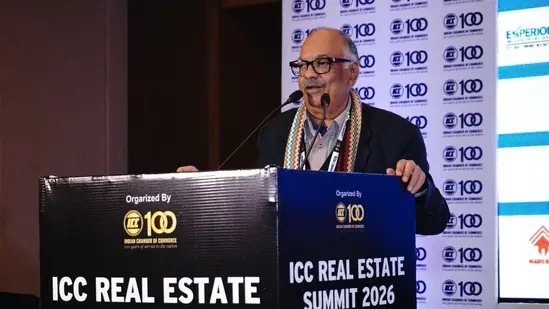
UP RERA chairman Sanjay R Bhoosreddy observed
that real estate is experiencing a surge in Uttar Pradesh, extending its reach
beyond the Delhi-NCR region.
Investments in Uttar Pradesh's real estate
market surged, climbing over 53 percent to almost ₹69,000 crore in 2025. This
growth reflects the sustained interest of developers nationwide, including
those from Maharashtra and Karnataka, in the state. UP RERA chairman Sanjay R
Bhoosreddy shared this information during his address at the ICC Real Estate
Summit 2026, which took place in the capital on January 20th.
Bhoosreddy emphasized the sector's role in
boosting the economy, noting that real estate investments by promoters, which
were approximately ₹29,000 crore previously, had climbed to ₹45,000 crore in
2024, and have now reached ₹69,000 crore this year. "That's a big
increase," he remarked.
He added, "Let me tell you, promoters
from South India, from Maharashtra, from Karnataka, and all the major national
companies – you name it, they're all now in Uttar Pradesh."
Real estate development, he observed, is
picking up steam throughout Uttar Pradesh, no longer limited to the Delhi-NCR
area. Developers are now eyeing cities like Agra, Bareilly, Moradabad,
Varanasi, Prayagraj, Ayodhya, Jhansi, Kanpur, Aligarh, Gorakhpur, Azamgarh,
Devi Patan, and Mirzapur, and a slew of projects are already in the works.
He added that land prices in Ayodhya have
skyrocketed, with the priciest plots now reaching ₹1 lakh per square foot.
RERA registrations for real estate projects
are on the rise.
Uttar Pradesh is seeing a surge in RERA
applications for real estate ventures, a trend fueled by the government's
investor-friendly policies, he explained.
In 2025, the state received RERA approvals
for 308 real estate projects, exceeding the anticipated 300. This figure
represents roughly a 20 percent increase compared to the 259 projects
sanctioned by the regulatory body in 2024, he observed.
The state's RERA registration process, he
explained, has a minimum turnaround time of four days, assuming a developer
submits all the necessary information. The maximum wait, however, is thirty
days.
"The Government of India aims to elevate the economy to $5 trillion. Our Chief Minister has committed to propelling UP toward a $1 trillion economy in the near future. We're all dedicated to making that happen," he stated during the event.
Focusing on consumer trust and protection, he
pointed out that timely delivery benefits the industry, citing a significant
drop in complaints. Daily case filings have decreased from roughly 35 to an
average of 9.5. "We want to eliminate this number entirely," he
stated.
Rajeev Singh, Director General of the Indian Chamber of Commerce (ICC), noted in his speech that a fundamental shift in demand is apparent. Affordable housing is being supplanted by luxury segments, fueled by increased incomes and changing lifestyles. Tier I cities are at the forefront, Tier II markets are gaining momentum, and larger, wellness-oriented homes with abundant amenities are reshaping residential preferences.
The ICC–ANAROCK report, Indian Residential
Real Estate: A Review and Road Ahead, was unveiled during the event. The report
pointed out a significant change in India's housing market: a move away from
growth driven by sheer volume and towards growth fueled by value. Though
housing sales in the top seven cities dipped 14 percent year-on-year, totaling
roughly 3.96 lakh units in 2025, the overall transaction value increased by 6
percent, exceeding ₹6 lakh crore.
The report highlights a significant drop in
the affordable housing sector. Homes priced under ₹75 lakh, which represented
nearly 60 percent of sales in 2021, now make up only roughly 32 percent of the
market. Conversely, the luxury and ultra-luxury segments have seen substantial
growth, fueled by increasing incomes, evolving lifestyles, and greater
affordability for urban purchasers.
Anuj Puri, chairman of the Anarock Group,
noted at the inaugural session, "Buyer preferences have clearly changed.
Homes with three bedrooms or more now account for approximately 45–50 percent
of demand, a rise from roughly 30 percent in 2018. This shift emphasizes the
increasing preference for larger, premium homes within India's urban housing
markets."
Source: Hindustan Times