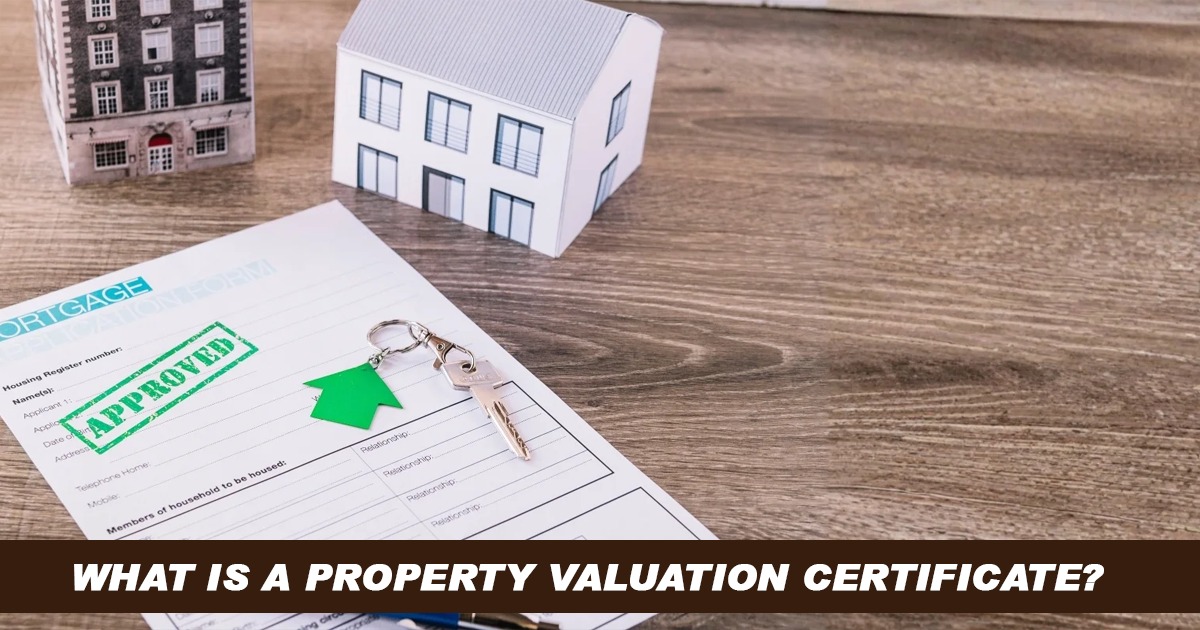
What is a property valuation certificate?
By Bricksnwall | 2026-05-20
In the fast changing Indian real estate
market, it is very important to find out true value of a property for financial
and legal reasons. Whether you’re purchasing a home, asking for a loan, or
resolving a dispute, stakeholders typically rely on an official document that
sets forth the fair market value of a property. This document is called
property value certificate.
Property valuation certificate A supported estimate of the value of a property
at a certain moment. It is a dependable reference for banks, buyers, sellers
and regulators, which enables openness and reduces the danger of financial
misjudgement.
What does a Property Valuation Certificate
mean?
What does a property valuation certificate
mean? A property valuation certificate is an official document provided by a
qualified valuer that indicates the current market value of a property. It is
developed after comprehensive inspection and study of different criteria
including location, size, condition and prevalent market trends.
The certificate normally includes:
Property description (location, kind, size,
use)
Ownership info
Valuation method
Market value estimate
Observations and assumptions to support
Unlike the casual price estimates of brokers
or online platforms, a value certificate is a legal and financial
document
Who may Issue Property Valuation Certificate
in India?
Property valuation certificates in India are
produced by experienced specialists who are permitted to appraise the worth of
property on the basis of conventional methodologies.
These are:
Government Approved valuers
Valuers empanelled by the Bank
Chartered engineers & chartered surveyors
Registered valuers governed by the Insolvency
and Bankruptcy Board of India (IBBI)
Banks and financial organizations generally
use their own panel of valuers to provide independent and consistent
valuations, particularly for loan applications.
When Do You Need a Property Valuation Certificate?
There are a number of situations where a
correct value is important and you will need a property valuation certificate:
Home loan applications: It is used by lenders
to decide the loan amount and risk assessment
Buying or selling property: Helps both
parties get a reasonable price
Property tax assessment: Local authorities
may use value data
In case of insurance: Sufficient coverage
depending on property value
Legal Disputes: For inheritance, partition or
lawsuit case
Financial reporting: Mandatory for wealth
declarations and audits
In all these cases, a certified assessment
lends confidence and minimizes arguments.
Property Valuation Types in India
Valuations are done in many ways, depending
on the need:
Market value: The price a property would likely sell for on the open market
Guidance value (circle rate): Minimum value
imposed by the state governments for registration
Fair value: A fair assessment of both market
conditions and intrinsic value
Distress value: The price expected in forced
or urgent sales
Value of insurance: Cost of reconstruction of
property less value of land
Understanding these sorts helps stakeholders
understand valuation certificates accurately.
Important Factors in Property Valuation
A property's valuation will be determined by
a combination of physical, legal and economic factors:
Location: Near schools, transport hubs and
business centres
Property size and layout Built-up space,
layout and utility
Age and condition Older properties are worth
less unless they have been renovated
Market trends: Demand supply dynamics in the
location
Amenities: Parking, security, lifts and
recreational amenities available
Legal status: Clear titles and approvals add
value
Circle rates: Government-mandated minimum
rates affect value benchmarks
These aspects are analysed by a trained
valuer to arrive at a fair assessment.
Property Valuation Documentation Requirements
The valuer must be supplied with necessary
documents such as for issuing correct valuation certificate:
Title document or sale deed
Property tax revenue
Building plan approved
Certificate of Encumbrance
Proof of owner identification
These documents help to establish the
ownership, legality and the physical details of the property.
How to Obtain a Property Valuation
Certificate
Here's how the process of acquiring a
property valuation certificate normally looks:
Get a licensed valuer: The property owner or
institution chooses a qualified professional
Documents submission: Relevant property
papers are shared for cross verification
Site Inspection: Thevaluer examines the
property to evaluate its condition and surroundings
Market analysis: Comparative Property
Transactions Study
Valuation computation: Appropriate strategies
such as sales comparison or cost approach are applied
To be issued certificate: A complete report
is created and signed
It can take a few days to a week depending on
the complexity.
Property Valuation Costs in India
The price of a property valuation certificate
depends on various factors:
Type and size of property
Location (additional charges for metro
cities)
Purpose of the valuation (loan, legal or
private use)
Reputation and experience of the valuer
The fees can be a few thousand rupees on an
average to greater for large or complex properties. Bank-arranged values are
occasionally included in processing expenses.
Validity of Property Valuation Certificate
There is no standard specified period of
validity of a property valuation certificate.
But in practice:
Most credentials are valid for 3 to 6 months
Fast market movements may need earlier
re-assessment
Banks might ask for fresh valuation in case
of delayed deals
Periodic revisions are recommended as
property values change over time
Why You Need a Property Valuation Certificate
A property value certificate is a useful
instrument for transparency and informed decision making:
Fair pricing: Avoids to overprice or
underprice
Loan approval support: Assists lenders in
evaluating collateral value
Legal backing: Used as evidence in conflicts
Tax clarity: facilitates proper reporting
Risk Mitigation: Decreases financial and
legal uncertainty
In an increasingly regulated real estate
world, certified valuations have become a must.
Property Valuation vs Home Appraisal
Difference
Property value and home appraisal are
commonly used interchangeably, however their scope and purpose are different:
Property appraisal Formal comprehensive
valuation by licensed valuers for legal & financial objectives
Home appraisal: A simple estimate generally
used by lenders to establish loan eligibility
Valuation reports are more detailed and have
greater credibility in official situations.
Mistakes to Avoid
Some pitfalls to avoid when getting or using
a property valuation certificate are:
Using only broker estimates without
certification
Evading legal verification of property
documents
The employment of unlicensed or unqualified
valuers
According to old valuation reports
Not considering market trends in decision
making
These are the hazards to be
avoided if the valuation is to play its intended role.