Ganga Expressway to drive logistics, warehousing needs in UP; Tier II cities to turn into hubs
By Bricksnwall | 2026-04-30
Ganga Expressway to improve connectivity
across UP, enhance demand for logistics, warehousing; Tier II cities to emerge
as hubs.
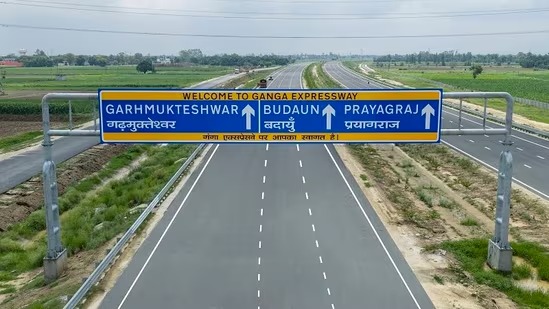
Prime Minister Narendra Modi on April 29
launched the 594-km Ganga Expressway linking Meerut and Prayagraj, a huge
infrastructural boost intended to improve connectivity and spur real estate
boom across Uttar Pradesh.
Real estate analysts believe that the
corridor will boost demand for logistics and warehousing, and also promote a
decentralised work paradigm, with cities like Meerut, Kanpur and Prayagraj
becoming secondary office hubs in addition to Delhi NCR. The residential
segment will also profit from the increased demand along the corridor, which is
leading to the construction of inexpensive homes, planned developments and
integrated townships in tier II and III cities.
An official statement claimed integrated
manufacturing and logistics clusters (IMLCs) are being constructed along the
corridor with facilities like as warehouses, cold storage units and food
processing hubs to attract investments and create employment.
“The expressway will also connect to other
major corridors like Purvanchal, Agra-Lucknow, Bundelkhand and Gorakhpur Link
expressways creating a huge interconnected network,” the statement added.
Ganga Expressway could change UP's logistics
and storage scene
According to Knight Frank India, for two
decades, the real estate story of Uttar Pradesh was the story of four cities -
Lucknow, Ghaziabad, Noida and Greater Noida. The Ganga Expressway is not just
the fifth spot on that list. It makes up a new geography of value creation,
which functions on a distinct logic: corridor-based, node-anchored and
industrially driven, rather than capital-city-adjacent and speculative.
The Ganga Expressway will create value across
time horizons and asset classes, in three concentric rings surrounding each of
the 18 interchange sites, spread over 12 districts. Its analysis suggests that
warehousing projects should be developed within three years and residential and
other real estate assets between the 2nd and 5th year of operation.
Potential for freeway development
Meerut might emerge as a key residential hub
in the NCR spillover on the Ganga Expressway while agro-processing hubs such as
Pratapgarh (amla), Shahjahanpur (rose/botanical) and Hardoi (dairy) will gain
from improved connectivity.
Knight Frank India said there is possibility
of cold chain development in Pratapgarh, Unnao and Hapur while Amroha, Badaun,
Shahjahanpur and Hardoi are anticipated to see growth driven by industry.
“The Ganga Corridor will open a new frontier
of real estate development in 12 districts,” said Rajeev Vijay, Executive
Director, Government and Infrastructure Advisory at Knight Frank India. For the
first time, an expressway will unite, in one high-speed economic geography, the
manufacturing belt of western UP, the agricultural heartland of central UP and
the education and pilgrimage economy of eastern UP. This would channelise state
economics and will also be the key growth backer of the economics of North
India.
Vimal Nadar, National Director and Head,
Research at Colliers India, believes the Ganga Expressway will boost industrial
and warehousing demand along its corridor, strengthened by other important
infrastructure projects like the Eastern Dedicated Freight Corridor, National
Waterway 1 (Haldia to Varanasi), Yamuna Expressway and Purvanchal Expressway.
This multimodal connectivity is projected to
boost supply chain efficiencies, cut transit times and encourage the creation
of warehouse clusters in major markets that are well-positioned to emerge as
strategic distribution and logistics hubs. In fact, places like Meerut, Kanpur
and Prayagraj are expected to witness more participation from top businesses
aiming to reach high potential markets, he said.
He said the projected traction will be backed
by augmentation of manufacturing and MSME ecosystem through initiatives such as
the Industrial Smart City Mission, hence speeding balanced economic growth
across the state.
On the commercial front, the Ganga Expressway
is likely to promote a more dispersed work model, with Tier II cities like
Meerut, Kanpur and Prayagraj emerging as secondary office hubs alongside Delhi
NCR. Demand for housing is predicted to pick up in the catchment areas along
the corridor, which is also expected to boost the residential segment. Nadar
said urban spillovers might further boost the development of cheap homes,
planned projects and integrated townships across the Tier II and III cities in
the state.
“We are already witnessing the early signs of
value firming along the Prayagraj corridor, due to infrastructure momentum and
its positioning as a key temple city,” said Mohit Goel, Managing Director,
Omaxe Limited. “The government's proposed Rs 5,000 crore push towards temple town
development will likely further boost real estate demand due to the consequent
boost in tourism and civic infrastructure.
“The demand in residential and commercial
sectors is expected to drastically shift towards Meerut and Hapur, as both
these places now offer high-speed connectivity to major employment hubs,” said
Sachin Vyas, Chief Sales Officer, Square Yards. In addition to a residential
boom, the true economic engine would be the convergence of 11 industrial
corridors throughout 12 districts along the 594-km stretch.
Source: Hindustan Times