Water Fountain for Home Vastu: Benefits and Tips for Placement
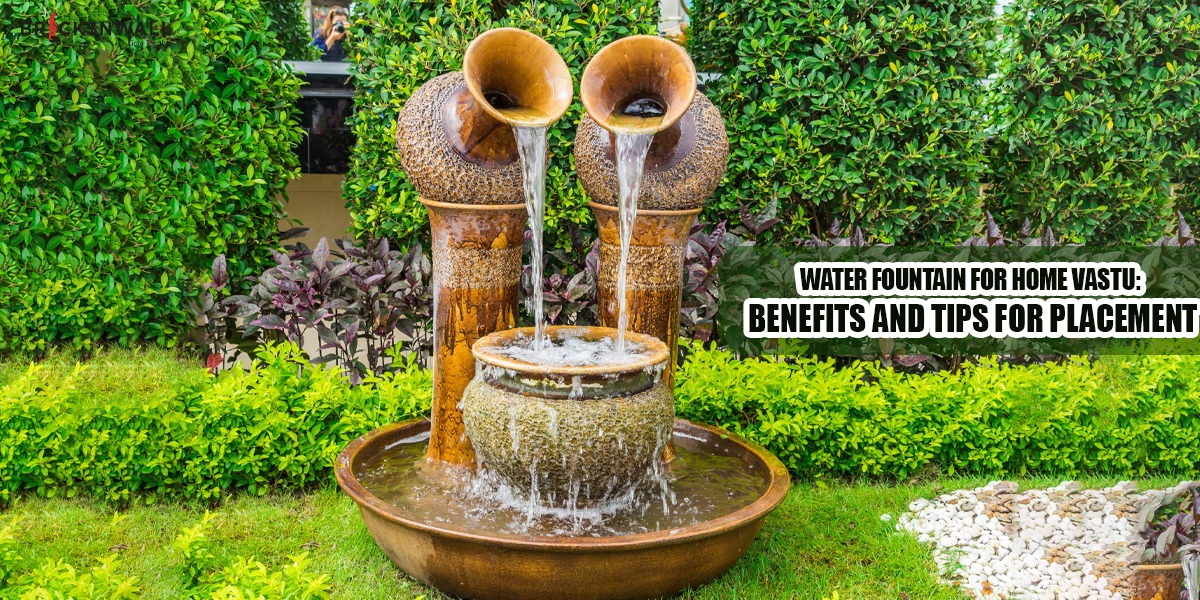
The gentle murmur of water instantly enhances
the look and feel of any environment, be it a house, a workspace, or a garden.
Beyond mere decoration, water fountains are believed to be conduits of positive
energy, according to Vastu Shastra. Water is frequently linked to the
circulation of wealth and prosperity within this framework. Positioning a
fountain correctly not only brings tranquility and vitality to a space, but it
can also attract good fortune, financial success, and joy.
Vastu's take on water fountains offers
several potential advantages.
Wealth and prosperity are often associated
with them. The idea is that a water fountain, positioned correctly, can draw
financial stability into a home. This stems from the belief that moving water
symbolizes the arrival of money and fresh opportunities.
Good fortune is another claimed benefit.
Flowing water is thought to dispel negative energies, thereby inviting luck and
success.
Furthermore, water is believed to help
balance the energies within a space. Stagnation, in contrast, can lead to an
imbalance. The constant movement of water is said to foster equilibrium and
harmony.
Relationships, too, may benefit. A water
fountain in the home is thought to strengthen emotional bonds, encouraging love
and unity among family members.
Finally, there's the potential for improved indoor air quality. As water evaporates, it releases negative ions, which can help cleanse the air.
This fosters a revitalizing atmosphere,
improving both mood and focus.
Decorative indoor water fountains
significantly boost a home's visual charm, thanks to their diverse styles,
shapes, materials, and designs.
They also function as humidifiers. These
fountains, whether affixed to a wall or standing freely, naturally increase the
humidity in a room. This can be especially beneficial for indoor plants.
Furthermore, they're low-maintenance. Water
fountains are simple to care for, requiring only a weekly refill and a thorough
cleaning every few months. Cleaning involves draining the water and wiping down
the surfaces.
Alternatives to keeping water fountains at
home
Small Water Fountains
If a full-sized water fountain isn't an
option, a smaller, tabletop version can still provide similar benefits.
When natural water sources aren't feasible,
there are other methods to introduce beneficial water energies and address any
Vastu doshas present in the home. These include:
Mirrors
in
Vastu, are thought to embody the water element; their reflective nature
suggests fluidity and motion. Consequently, they serve as a beneficial Vastu
element, potentially improving the energy circulation within a space.
Furthermore, mirrors can be strategically positioned in accordance with Vastu
principles to reflect water-themed imagery, thereby fostering positive energy.
Aqua Color Schemes
Colors like blue, aqua, and black are linked to the water element in Vastu. Consequently, you can use these hues in walls, lighting, and furniture to mimic the calming influence of actual water elements.
The sounds of flowing water can be utilized to create a peaceful environment. Playing gentle music or the sounds of running water can help generate the calming effects of water features and improve the atmosphere of a room. Similarly, wind chimes can also have a pleasant influence on the surroundings.
Water Fountain Artwork
When a physical water fountain isn't an
option, waterfall paintings or similar artwork can be used within a home to
draw in wealth, prosperity, and tranquility.
Opt for sizable pieces featuring colors like
blue and green, perhaps with hints of white and silver, to reap the greatest
rewards.
Steer clear of paintings depicting a chaotic
water flow.
Choose frames crafted from wood or metal.
North is where the water fountain should
ideally be placed, according to Vastu principles. This direction is associated
with wealth, overseen by Kubera, the god of riches. A fountain here is believed
to draw in prosperity.
The East is also a good spot. Ruled by the king of the gods, placing a water feature like a fountain in this direction is thought to bring financial gains.
Northeast: If the preferred location isn't
feasible, a water fountain can be positioned in the northeast. This arrangement
is believed to draw in prosperity and bolster financial well-being.
Northwest: Positioning a water fountain in the northwest corner can be beneficial for both financial security and professional advancement. The northwest is linked to the air element, and a water feature there can foster a more balanced atmosphere.
South: The southern sector, linked to the
fire element, is connected with fame and recognition. Feng Shui principles
suggest steering clear of water fountains in the south corner; it's not a good
spot, as water extinguishes fire.
Southeast: The southeast direction, also tied
to the fire element, isn't ideal for water fountains. Putting one there could
lead to financial setbacks and disharmony.
Southwest: The southwest direction represents stability and support, and it's best left undisturbed. Heavy furniture is usually fine in the southwest area, but water fountains should be avoided.
Placement of a water fountain within a home can be a thoughtful decision
Main Entrance: According to Vastu principles,
positioning a water fountain in the living room, close to the main entrance, is
believed to attract positive energies. This placement is thought to ward off
negative energy. The fountain's water flow should be directed inward, toward
the house, rather than outward.
Yard or Garden: A substantial water fountain
situated outside, in the yard or garden, is also considered auspicious
according to Vastu. It's best to place it in an open area, free from any
hindrances.
You can position a water fountain in the
north, east, or northeast corners of your home; these directions harmonize well
with water elements. If those areas aren't feasible, a metal water fountain can
be placed in the northwest corner. For outdoor fountains, the northeast or east
corner of your garden is ideal.
To encourage positive energy, install the fountain in your living room or near the main entrance. This placement helps to keep negative energy at bay. Ensure that the water flows inward, toward your home, rather than outward.
Location to Avoid
Center of the House: Vastu principles advise
against positioning a water fountain in the middle of your home. Doing so can
disrupt the flow of energy, preventing it from functioning optimally. A more
favorable placement would be the north corner, close to the main entrance, to
encourage positive energy.
Bedroom: Vastu guidelines also recommend
against placing a water fountain in the bedroom. The water element is believed
to be detrimental to relationships when introduced into this space. It's best
to avoid water fountain paintings in bedrooms as well.
Under a staircase, Vastu Shastra principles
suggest that a water fountain should be avoided. This is because the placement
would hinder the beneficial effects of water energies, which require an open
environment. Furthermore, such a placement could negatively affect health,
particularly for children who often play in that area.
Bathrooms, which are inherently linked to water, also present a consideration. Vastu advises against placing water fountains in bathrooms, as this can lead to an overabundance of water energy, thereby disturbing the spatial energy equilibrium.
Different types of water fountains
1. Wall Fountain

Water in a wall fountain cascades from the top of a panel, eventually reaching the bottom. These are ideal for compact areas, though installation might require a professional's touch.
2. Cascading Water Fountain

In this design, water tumbles down over rocks or other stones, with tiers linked by small steps to create a flowing, cascading effect.
3. Tiered Fountain

Another favored choice for smaller spaces, tiered fountains feature multiple levels that converge at a single point before emptying into a shared pool below. They're often crafted from materials such as marble, stone, concrete, or glass.
4. Japanese Bamboo Fountain
crafted from bamboo, often include a circular
arrangement of sticks encircling a central base. These fountains come in a variety
of designs and dimensions.
5. Tabletop Water Fountain

Vastu principles place significant emphasis on light. Proper illumination can elevate spirits, foster tranquility, and generally make a space feel more inviting. The northeast corner of a property, associated with wisdom and positive energy, is considered the "sattva" corner. Therefore, placing light fixtures on the north and east walls is believed to invite good fortune and prosperity. Consider water fountains illuminated with white or off-white lights. You can also synchronize the sound of trickling water with music, lighting, or both, creating a waterfall fountain that flows harmoniously and looks beautiful. The added lights enhance the peaceful visual experience.
6. Ganesh Water Fountain
As many believe that having Ganesha statues
brings good fortune and wealth. If you're thinking about it, a Ganesha water
fountain could be a lovely addition. Just be sure to consider Vastu Shastra
when deciding where to put it. The northeast corner of your home is often
recommended. Decorative statues, including water fountains, also work well near
the entrance. Placing the Ganesh water fountain in your living room or near the
entrance is thought to invite positive energy into your space.
7. Hanging Water Fountain
offer a space-saving solution for
smaller homes, easily suspended from a ceiling or wall. This vertical feature
can also enhance a home's Vastu. These fountains come in a variety of materials
and sizes.
8. Large or Small
A water fountain can be a beautiful addition to outdoor spaces like gardens or yards.
These features represent positive energies,
infusing a space with vitality through the presence of water and its calming
sounds. Tall fountains, ideally situated in open areas, should be free from any
hindrances. They are also associated with prosperity and progress.
9. Rock Water Fountain

Rock fountains offer a rustic charm, suitable
for both indoor and outdoor settings. As a natural element, rock symbolizes
peace and strength, and according to Vastu and Feng Shui principles, it draws
in a wealth of positive energy.
10. Pond Water Fountain

According to Vastu principles, a pond water
fountain can be an attractive feature if there's enough outdoor area. Adding
aquatic plants and fish enhances the pond's visual appeal. Furthermore, these
elements help generate positive energy in the surrounding environment. A bamboo
water fountain or a fountain pipe would be a good option.
11. Tree Water Fountain

Vastu principles suggest that integrating
natural components into a home's design can enhance positive energy. A tree
water fountain, for instance, introduces the elements of water and wood or
metal into the environment. Copper or brass are frequently chosen materials for
crafting these fountains.
12. Buddha Water Fountain
This particular water fountain showcases a
Buddha figurine, which fosters a tranquil atmosphere and the beneficial
energies associated with the Buddha. Vastu guidelines recommend positioning a
Buddha fountain in the northeast, as this placement is believed to promote
mental clarity and spiritual health.
Vastu elements to combine with water fountain
Plants: Houseplants, when positioned near a
water feature, can amplify the tranquility of the area. Consider placing a
lucky bamboo plant close to a water fountain; it's a great Vastu element that
can help bring in good energy.
Flowers: Filling vases with fresh flowers and
placing them around the water fountain is a wonderful way to encourage positive
energies.
Natural Stones and Crystals: Incorporating natural stones or crystals, such as rose quartz and amethyst, into the fountain can also help to increase positivity.
Wind chimes offer a lovely touch when positioned near a water fountain. Their gentle sounds contribute to a tranquil atmosphere.
Soft lighting, too, can enhance the area
around the fountain. It casts a warm glow, fostering a sense of calm. Stick to
soft lighting; bright or flashing lights can throw off the energy.