Property prices, housing demand, and office markets may be affected by the opening of Noida International Airport
By Bricksnwall | 2026-06-15
The Yamuna Expressway region is poised for a
new development phase with the inaugural flight at Noida International Airport,
which is anticipated to stimulate real estate demand.
The airport is on the brink of becoming much
more than a mere portal for air travel, as the first commercial flight touched
down at Noida International Airport in Jewar on June 15. In the same manner as
successful aerotropolis hubs worldwide, it is anticipated that it will serve as
the foundation for a more extensive ecosystem of industries, logistics parks,
and commercial development along the Yamuna Expressway corridor. This will
generate employment opportunities, attract investment, and stimulate long-term
housing demand.
In a manner reminiscent of global models such
as Schiphol in the Netherlands, the Jewar region is being constructed around a
combination of aviation infrastructure, logistics parks, industrial clusters,
business districts, residential communities, and commercial centers. The
region's investment appeal is anticipated to be enhanced, and travel times will
be considerably reduced, as a result of the improved connectivity provided by
expressways, freight corridors, and multimodal transport networks.
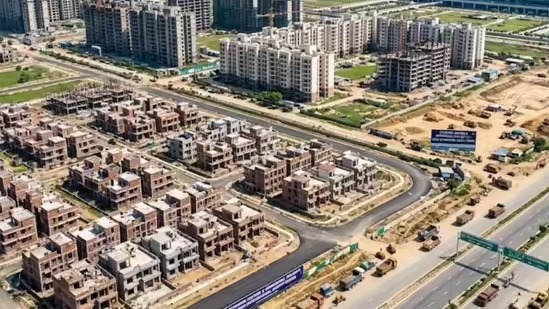
Economic activity is anticipated to accelerate, which is anticipated to have an
impact on the residential market. A substantial portion of the housing demand
is concentrated in sectors situated within a 15-km radius of the airport,
particularly Sector 22 along the Yamuna Expressway. This sector is home to
numerous distinguished developers who have initiated residential townships and
integrated developments.
Influence on housing markets
In the report "Runway to Realty: How
Noida International Airport is Reshaping Realty" by Square Yards, the
prices of apartments along the Yamuna Expressway corridor have nearly tripled
between 2020 and 2025, while site values have increased by an average of 1.5
times. Infrastructure development, industrial growth, and increasing employment
opportunities have all contributed to the appreciation of certain micro-markets
by as much as five times.
It is anticipated that the momentum will persist. The report anticipates that
plot prices could rise by an additional 28% and apartment values by 22% in the
next two years, with ongoing enhancements in economic activity, livability, and
connectivity.
The more extensive narrative surrounding
Jewar, as per Rahul Purohit, co-founder and CBO of Square Yards, is far more
extensive than the airport itself. The region is currently being transformed
into a significant logistics and warehousing center, with cargo infrastructure
anticipated to be a significant factor in the stimulation of economic activity.
This commercial and industrial development is expected to generate employment
opportunities, which will subsequently bolster the long-term residential demand
in the Yamuna Expressway corridor.
Numerous developers have already established
themselves to capitalize on this expansion. The area's growth prospects are
anticipated to be further enhanced by planned commercial developments.
Purohit is of the opinion that the
opportunity for real estate investors remains alluring, despite the significant
appreciation that has already occurred. He draws a comparison between the
trajectory of the region and the areas encircling Navi Mumbai's Panvel and
Bengaluru's international airport, where investors who invested early are now
experiencing substantial returns. Nevertheless, he advises that Jewar should be
considered a long-term investment rather than a quick-flip opportunity.Ten
years ago, investors entered the Yamuna Expressway market at a price of
approximately ₹4,000 per square foot. "Today, prices have reached
approximately ₹11,000 per square foot; however, the narrative is still
unfolding," he stated.
According to Purohit, residential investments
in the Yamuna Expressway corridor have the potential to yield annual returns of
12-13% in the long term, provided that investors maintain their investment
throughout the area's subsequent phase of development.
As commercial ventures, logistics parks, and
employment hubs become operational, investors should anticipate holding assets
for a minimum of five to seven years, according to him. The demand for housing
is anticipated to increase consistently as job creation accelerates, which will
contribute to further price appreciation.
In order to stimulate housing demand in the vicinity of Jewar Airport, real
estate developers have placed their bets on job creation.
Developers are of the opinion that the
sustained housing demand along the Yamuna Expressway corridor will be driven by
the employment opportunities generated by the airport, logistics centers,
industrial parks, and manufacturing clusters. The initial demand is anticipated
to be primarily concentrated in the mid-income and affordable segments,
including studio apartments. As the economic ecosystem of the region matures,
premium and luxury housing are expected to acquire traction.
Commercial real estate impact
The job environment will probably be varied,
from the logistics, warehousing, aviation, commercial services and
manufacturing, providing chances for blue and white collar workers. Demand is
broad-based, which might help a variety of types of housing, from cheap
dwellings to luxury apartments.
The Noida International Airport (NIA) is set
to be a structural catalyst for the next phase of real estate transformation in
the NCR, with better global connectivity and an already developing economic and
real estate base. “The airport is expected to act as a second international
gateway for the region, with an initial capacity of 12 million passengers and
long-term scalability to 70 million, enhancing the region’s integration with global
business networks,” said Supriya Chatterjee, Managing Director, North, Cushman
& Wakefield.
This is on the back of solid fundamentals in
the office segment with Noida now having 43.4 MSF of office stock including
26.6 MSF of Grade A+ supply, a substantial increase in investment-grade assets
over the past five years, with lease activity at 4.7 MSF in 2025. NIA is
projected to further build on this strength by attracting higher value
occupiers which might see an increase in absorption and boost the city’s Grade
A+ profile. State incentives and a healthy talent ecosystem have also helped
lift GCC activity to ~2 MSF. “The strong base is expected to support the GCC
demand as the improved global access may encourage multinational firms to
consolidate, expand or set up operations in Noida,” he said.
Source: Hindustan Times